Lupin
Allergen P of the 14 allergens that must be declared under EU Regulation 1169/2011
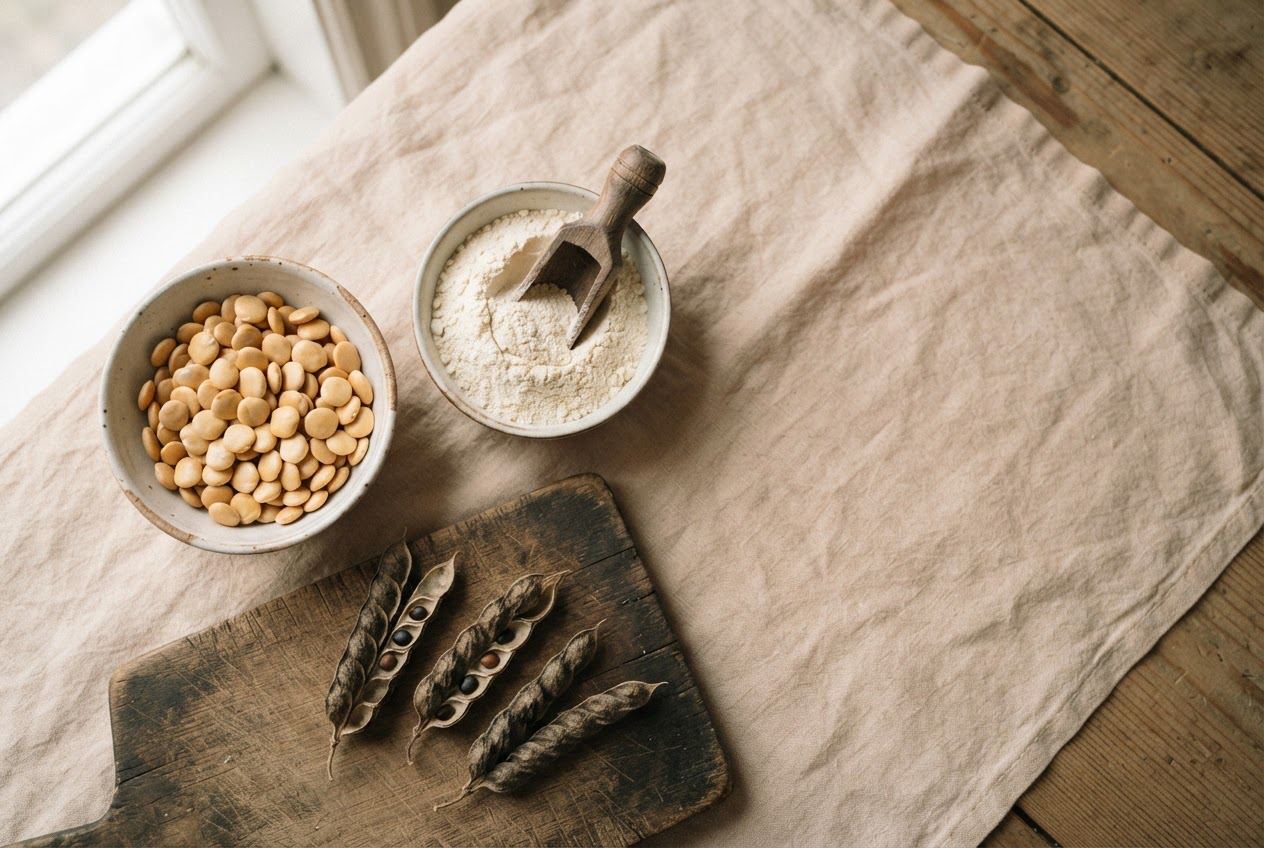
Where lupin can hide
Lupin flour
Gluten free bread, cakes, pizza dough
Vegan milk alternatives
Lupin drink, yoghurt and ice cream alternatives
Meat substitutes
Vegan sausages, cold cuts, patties
Pasta
Protein pasta, low carb pasta
Egg substitute
Binder in vegan baked goods
Lupin coffee
Caffeine free coffee alternatives
Pickled lupins
Lupini beans as a snack, Mediterranean starters
Protein powder
Shakes, sports nutrition, bars
What restaurants must declare
- The letter P next to every dish that contains lupin, right on the menu.
- A key to the letter codes, clearly visible in the restaurant or on the menu.
- Information given orally only by a person with documented training, with the allergens of each dish recorded in writing.
- Update with every change to a recipe.
Frequently asked questions
- Why do people with a peanut allergy often react to lupin?
- Both are legumes with similar proteins, and cross reactions are documented. That is why lupin is in Annex II, although it is rare in the kitchen.
- Where does lupin turn up in restaurants?
- Mostly in gluten free and vegan products from suppliers: flour blends, meat substitutes, milk alternatives. The label says lupin, lupin flour or lupin protein.
- Are lupin and soya the same allergen?
- No. Lupin (P), soya (F) and peanuts (E) are three legumes with three letters of their own and are declared separately.
Related allergens (legumes)
Sources: Regulation (EU) No 1169/2011, Annex II · Austrian Allergen Information Ordinance, Federal Law Gazette II No 175/2014 · Codex recommendation on letter codes (Austrian Ministry of Health, 2014)
Declare lupin properly on your menu.
The digital menu marks the 14 allergens on every dish.