Molluscs
Allergen R of the 14 allergens that must be declared under EU Regulation 1169/2011
Molluscs are allergen R under EU Regulation 1169/2011: mussels, oysters, cuttlefish, squid, snails and everything made from them. Since 13 December 2014, restaurants in Austria must declare them for non-prepacked dishes too, in writing or orally by trained staff. Common sources: oyster sauce, seafood mixes, paella, calamari, escargots and fish soups.
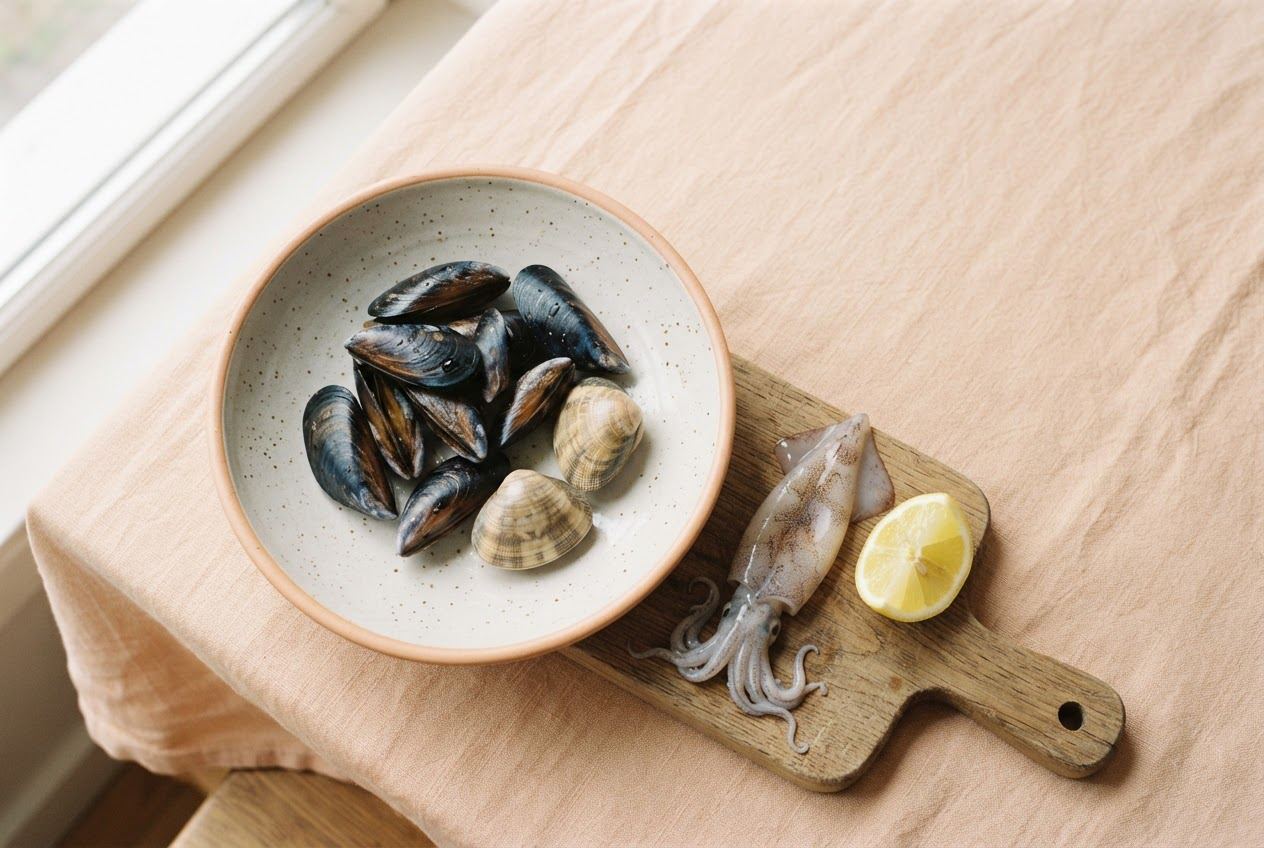
Where molluscs can hide
Oyster sauce
Chinese cooking, wok dishes, marinades
Seafood mix
Paella, frutti di mare, risotto
Calamari
Fritto misto, tapas, salads
Shellfish
Moules, vongole, scallops
Snails
Escargots, Burgundy snails
Fish soups
Bouillabaisse, zuppa di pesce
Squid ink
Black pasta and black risotto
Asian seasoning pastes
XO sauce, some fish sauces
What restaurants must declare
- The letter R next to every dish that contains molluscs, right on the menu.
- A key to the letter codes, clearly visible in the restaurant or on the menu.
- Information given orally only by a person with documented training, with the allergens of each dish recorded in writing.
- Update with every change to a recipe.
Frequently asked questions
- Are molluscs and crustaceans the same allergen?
- No. Molluscs (R) are mussels, squid and snails. Crustaceans (B) are prawns, lobster, crab and crayfish. A paella usually carries both letters.
- Does oyster sauce have to be declared?
- Yes. Oyster sauce is cooked from oyster extract and is a mollusc product. Every dish made with it carries the letter R.
- Does squid ink in black pasta count as mollusc?
- Yes. The ink comes from cuttlefish and squid and is a product made from them in the sense of Annex II.
Related allergens (seafood)
Sources: Regulation (EU) No 1169/2011, Annex II · Austrian Allergen Information Ordinance, Federal Law Gazette II No 175/2014 · Codex recommendation on letter codes (Austrian Ministry of Health, 2014)
Declare molluscs properly on your menu.
The digital menu marks the 14 allergens on every dish.