Mustard
Allergen M of the 14 allergens that must be declared under EU Regulation 1169/2011
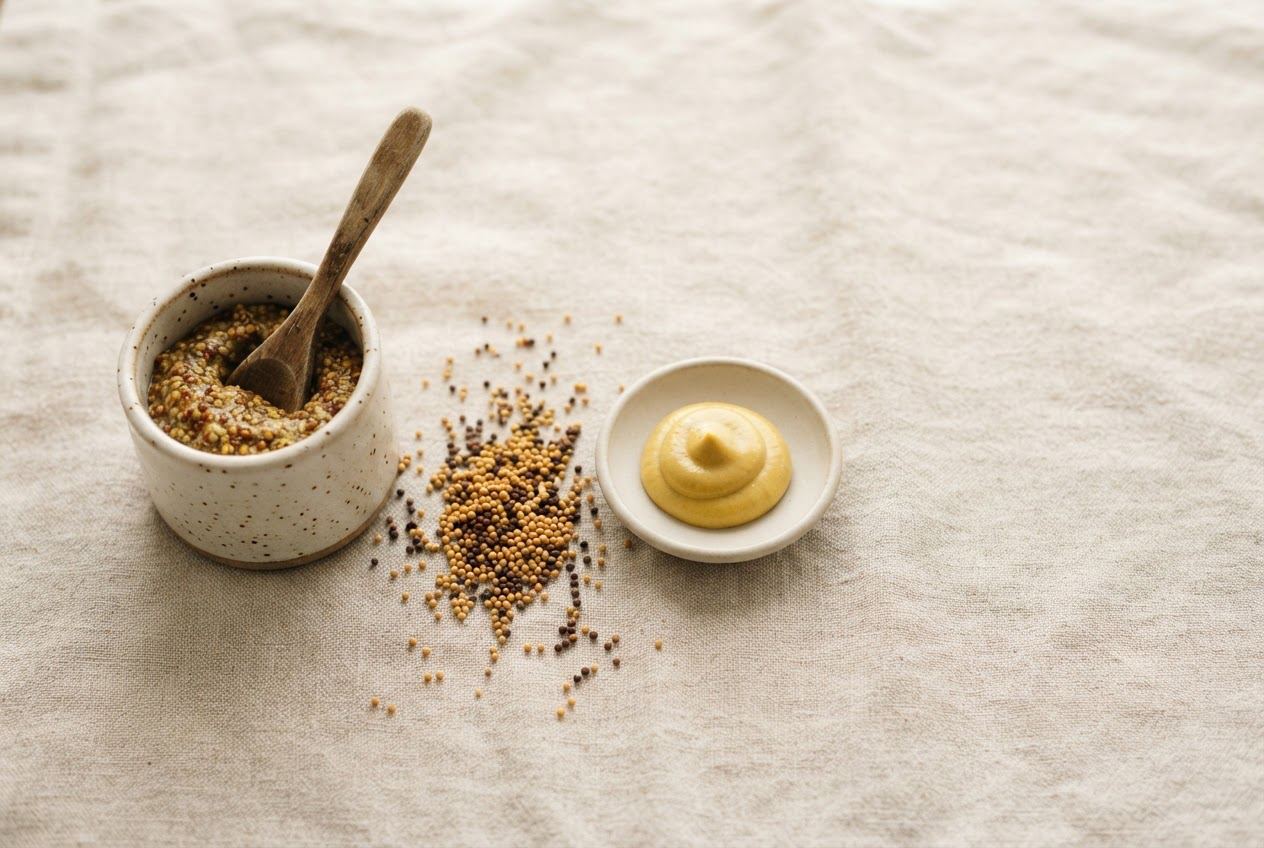
Where mustard can hide
Vinaigrette
Mustard as an emulsifier in salad dressings
Mayonnaise and remoulade
Potato salad, tartare sauce, cocktail sauce
Marinades
Grilled meat, honey mustard glaze
Sausages and cured meats
Mustard seeds in sausage meat and curing mixes
Gherkins and pickles
Mustard seeds in the brine, mixed pickles
Curry blends
Mustard seeds in garam masala, curry powder
Breadcrumb coating
Mustard as an adhesive before coating
Cheese sauces
Mustard in cheddar and fondue sauces
What restaurants must declare
- The letter M next to every dish that contains mustard, right on the menu.
- A key to the letter codes, clearly visible in the restaurant or on the menu.
- Information given orally only by a person with documented training, with the allergens of each dish recorded in writing.
- Update with every change to a recipe.
Frequently asked questions
- Does mustard in a vinaigrette have to be declared?
- Yes. A teaspoon of mustard as an emulsifier is enough, the amount does not matter. Every salad with such a dressing carries the letter M.
- Do mustard seeds in gherkins count as mustard?
- Yes. Mustard seeds in the brine are an ingredient of the product, and the dish the gherkins are in is declared as M.
- Do mustard sprouts or mustard leaves have to be declared?
- Yes. Annex II names mustard without limiting it to the seeds. Mustard leaves, sprouts, oil and flour are declared as M.
Related allergens (seasoning plants)
Sources: Regulation (EU) No 1169/2011, Annex II · Austrian Allergen Information Ordinance, Federal Law Gazette II No 175/2014 · Codex recommendation on letter codes (Austrian Ministry of Health, 2014)
Declare mustard properly on your menu.
The digital menu marks the 14 allergens on every dish.