Sulphites
Allergen O of the 14 allergens that must be declared under EU Regulation 1169/2011
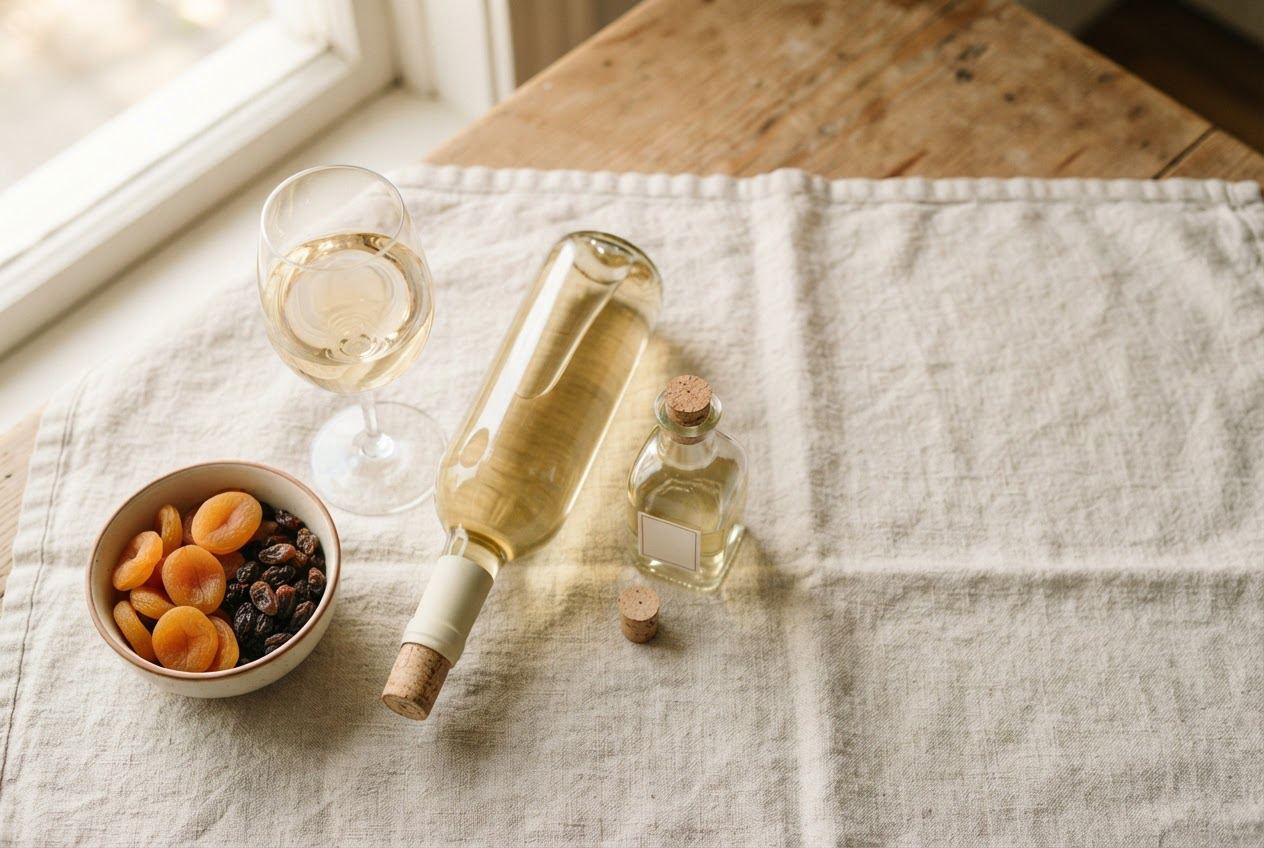
Where sulphites can hide
Wine and sparkling wine
Wine sauces, risotto, sabayon, coq au vin
Dried fruit
Apricots, raisins, figs in fillings and muesli
Vinegar
Wine vinegar and balsamic in dressings
Crustaceans
Prawns are often treated with sulphite
Potato products
Frozen chips, peeled potatoes, instant mash
Ready-made salads
Cut salads and coleslaw
Horseradish and mustard
Ready-made products preserved with sulphite
Fruit juices and syrups
Lemon juice concentrate, soft drinks
What restaurants must declare
- The letter O next to every dish that contains sulphites, right on the menu.
- A key to the letter codes, clearly visible in the restaurant or on the menu.
- Information given orally only by a person with documented training, with the allergens of each dish recorded in writing.
- Update with every change to a recipe.
Frequently asked questions
- Does a risotto made with white wine have to be declared as sulphite?
- Usually yes. Wine generally contains well over 10 mg/l of sulphite, and even after reducing, enough usually remains in the dish that the letter O should be set. When in doubt, declare it.
- How does a restaurant spot sulphite on a label?
- By the numbers E220 to E228, or by the words sulphur dioxide, sulphite, bisulphite or metabisulphite in the ingredients list, often with the note contains sulphites.
- Does the 10 mg limit apply to the ingredient or the dish?
- To the food as eaten, the way it is served. Because a restaurant cannot measure that, in practice every dish with an ingredient containing sulphite is declared as O.
Related allergens (often found together)
Sources: Regulation (EU) No 1169/2011, Annex II · Austrian Allergen Information Ordinance, Federal Law Gazette II No 175/2014 · Codex recommendation on letter codes (Austrian Ministry of Health, 2014)
Declare sulphites properly on your menu.
The digital menu marks the 14 allergens on every dish.